How to Buy Your First Telescope?
So, you’ve decided to take the plunge into the vast ocean of astronomy and buy your first telescope. Congratulations! You’re about to embark on a journey that will literally expand your horizons. But before you start throwing your hard-earned cash at the shiniest tube you can find, let’s navigate the celestial seas of telescope shopping together.
Why You Need This Guide to Buy Your First Telescope
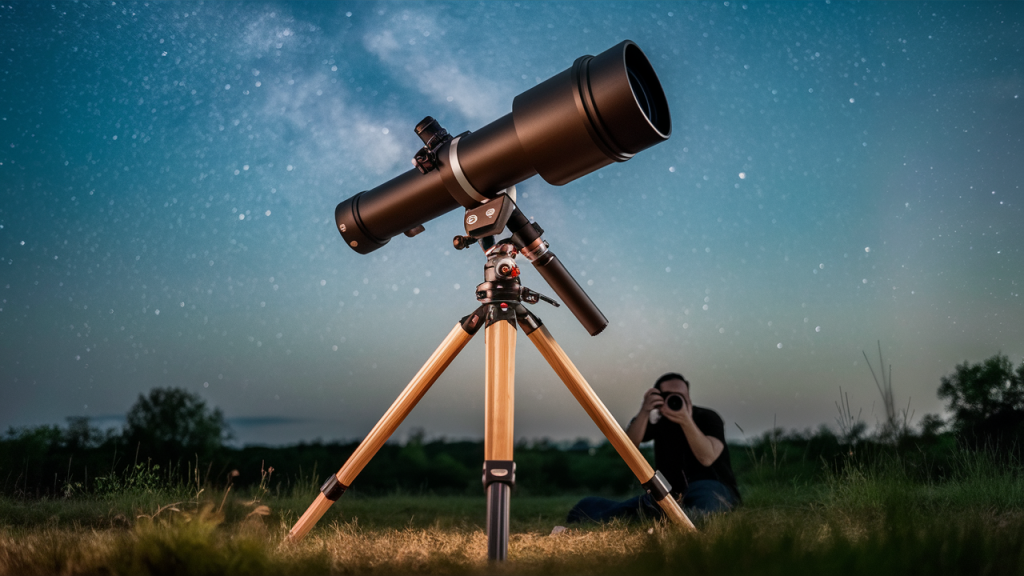
Buying your first telescope can be as daunting as trying to count all the stars in the sky. There’s a galaxy of options out there, and without a proper map, you might end up with a fancy paperweight instead of a window to the cosmos. But fear not, intrepid explorer! This guide will be your cosmic compass, helping you avoid the black holes of buyer’s remorse and steering you towards telescopic triumph.
Setting Your Sights (And Your Budget)
Before we dive into the nitty-gritty of telescope types and features, let’s talk about the elephant in the room – or should I say, the mammoth in the meteor shower? Your budget.
What's a Reasonable Budget. How to Buy your First Telescope
The good news is, you don’t need to sell your car or raid your kid’s college fund to get started in astronomy. A decent beginner telescope can be yours for the price of a few fancy dinners out.
The Ideal Price Range to buy your first telescope
For most beginners, a telescope in the $200-$500 range will provide an excellent balance of quality and affordability. This price range offers instruments capable of showing you breathtaking views of the Moon, planets, and even some deep-sky objects, without breaking the bank.
Remember, the best telescope is the one you’ll actually use. If you spend too little, you might end up frustrated with poor optics. Spend too much, and you might be too afraid to take it out of the box!
Refractor Telescopes: The Classic Choice
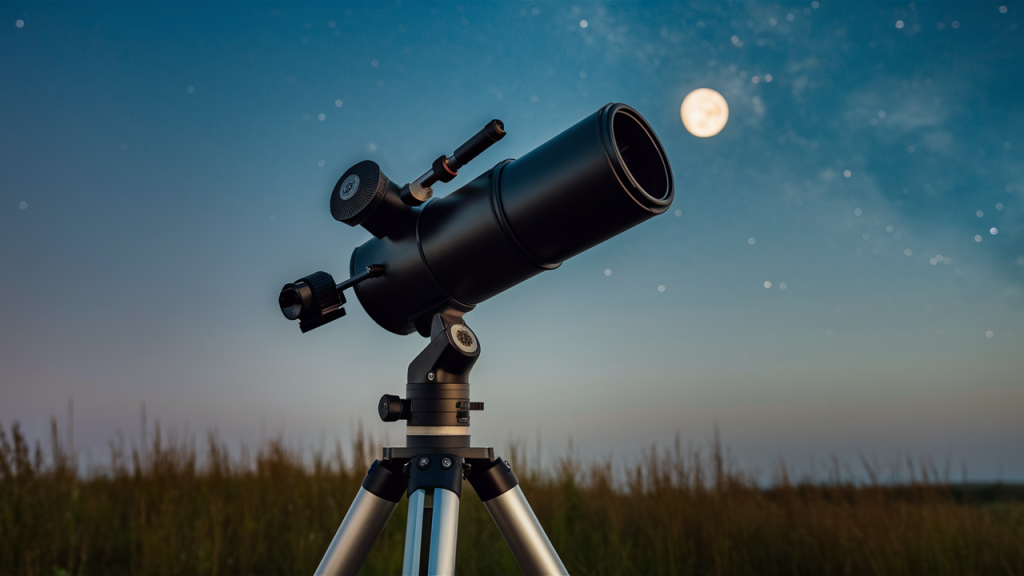
Refractors are what most people think of when they hear “telescope”. They use lenses to gather and focus light. Pros: sharp images, low maintenance. Cons: can be expensive for larger apertures.
Reflector Telescopes: More Bang for Your Buck
Reflectors use mirrors instead of lenses. They offer larger apertures (light-gathering ability) for the price. Pros: great for deep-sky objects, affordable. Cons: require occasional alignment (collimation).
Compound Telescopes: The Best of Both Worlds
These clever instruments combine mirrors and lenses. Pros: compact, versatile. Cons: can be pricier than reflectors of similar aperture.
Features to Focus On How To Buy Your First Telescope
When shopping for your first telescope, keep these key features in mind:
- Aperture: The most important feature. Larger aperture means more light-gathering power, which translates to brighter, clearer images.
- Mount: A stable mount is crucial. Avoid flimsy mounts that shake at the slightest touch.
- Portability: Consider where and how often you’ll use your telescope. A large telescope you never use is less valuable than a smaller one you take out regularly.
- Ease of use: As a beginner, you want something that’s relatively easy to set up and operate.
The Easiest Things to See with a Beginner Telescope
- The Moon: Our nearest neighbor is a spectacular sight even in small telescopes. You’ll see craters, mountain ranges, and “seas” of ancient lava flows.
- Planets: Jupiter’s cloud bands and four largest moons, Saturn’s rings, Mars’ polar caps, and Venus’ phases are all visible in most beginner telescopes.
- Star clusters: Open clusters like the Pleiades and globular clusters like M13 are beautiful targets.
What Should Beginners Look at First?
Start with the Moon – it’s big, bright, and impossible to miss. Once you’re comfortable finding and focusing on the Moon, move on to the bright planets. Jupiter and Saturn are particularly rewarding targets.
The Best Target for a New Telescope User
If I had to pick one target to recommend, it would be Saturn. There’s nothing quite like that first view of Saturn’s rings through your own telescope. It’s a moment you’ll never forget, and it might just be the spark that ignites a lifelong passion for astronomy.
Final Thoughts: Your Telescope
Buying your first telescope is more than just a purchase – it’s the beginning of an adventure. With the right instrument, you’ll be able to explore the craters of the Moon, witness the dance of Jupiter’s moons, and peek at the colorful clouds of distant nebulae.